

5 LinkedIn Content Ideas to Make Your Next Post Stand Out

As an executive, you’ve got your sights set on becoming a LinkedIn thought leader to gain credibility, increase your reach, and unlock new business opportunities.
At this point, you’ve set up your profile on LinkedIn and added a professional headshot. The stage is set, but your journey to thought leadership is still beginning.
Now, it’s time to start publishing LinkedIn content on a regular basis to build your audience and keep them engaged. Before we share some examples of what effective LinkedIn content looks like, let’s take a step back and cover some of the basics.
Table of Contents
- What Is LinkedIn Content & Why Is It Important?
- What to Post on LinkedIn: Content Ideas That Work
- Tips for Writing Engaging LinkedIn Content
- How Often Should I Post on LinkedIn to Maintain Engagement?
- Ready to Execute Your LinkedIn Strategy?
What Is LinkedIn Content & Why Is It Important?
LinkedIn content refers to posts, articles, and other forms of media shared on the platform to engage with your professional network.
Typically, LinkedIn content includes industry insights, thought leadership, and company updates shared across many different content types, including:
- Text-only posts
- Single-image posts
- Multi-image posts
- Native videos
- Articles
- Newsletters
- Documents
- Celebrating milestones
- Polls
For executives, posting LinkedIn content is important because it helps you increase your reach and begin building relationships with your audience.
Since 69% of LinkedIn’s users are active on the platform every day, posting on LinkedIn regularly is a great way to get more visibility on your personal brand, building credibility along the way.
Building a high-quality engaged audience is hard work, requiring a lot of thought, effort, and persistence.
What to Post on LinkedIn: Content Ideas That Work
1. Explain Industry Trends or Regulations
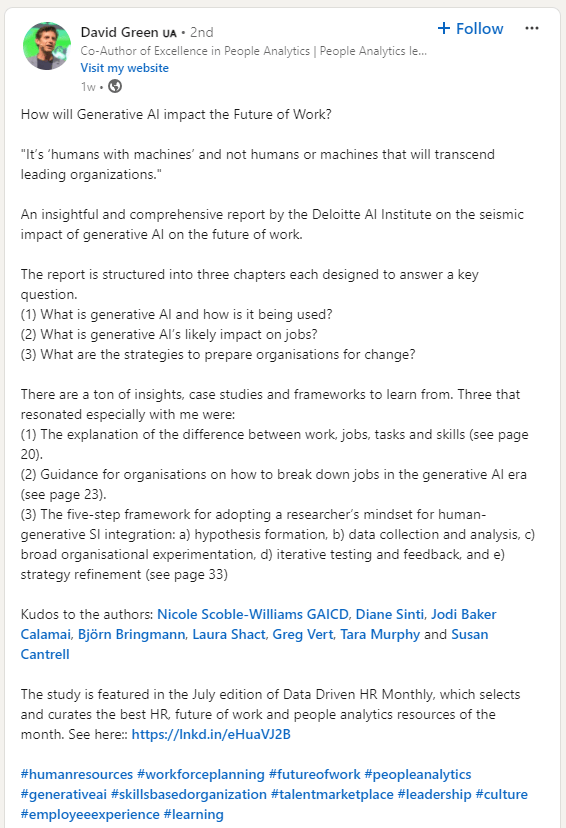
Sharing clear, actionable takeaways from complex industry reports helps position you as a trusted voice in your field.
As a founder, CEO, author, and podcast host, David Green has his toes dipped into many different pools and has upwards of 178,000 followers on LinkedIn.
Recently, he shared brief insights into a comprehensive report on generative AI produced by the Deloitte AI Institute — the perfect bite-sized summary the on-the-go LinkedIn reader can consume in short order.
Why This Works
- Generative AI is as hot-button a topic as it can get these days; Green taps into that while summarizing a report his audience is no doubt interested in and sharing his key takeaways
- Green tags eight of the report’s authors on LinkedIn, increasing the chances they’ll see his post and engage with it, further spreading his thought leadership
- The post is used to drive traffic and sign-ups to Green’s newsletter, Data Driven HR Monthly
2. Share Your Take on Topics in the News or Cultural Moments
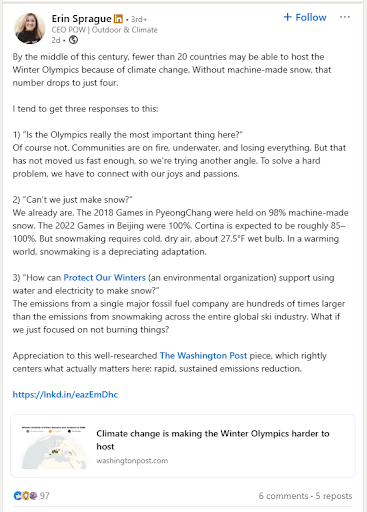
Responding to timely news or cultural moments with context and data allows leaders to add perspective—not just commentary—to the conversation.
As CEO of Protect Our Winters, Erin Sprague is committed to combating climate change to ensure that future generations are still able to play in the snow.
With the 2026 Winter Olympics approaching, Sprague took to LinkedIn to share insights into what the future of the sporting games might look like if we don’t take action to prevent the world from heating up.
In her post, Sprague shared her own thoughts on the issue while linking to a piece on the topic in The Washington Post.
Why This Works
- This topical post captures the attention of readers who are interested in the Olympics
- The Post story is a perfect fit for Sprague because it aligns with her organization’s mission
- It’s a thought-provoking post that piques interest and encourages conversation
3. Share Leadership, Management, or Career Advice
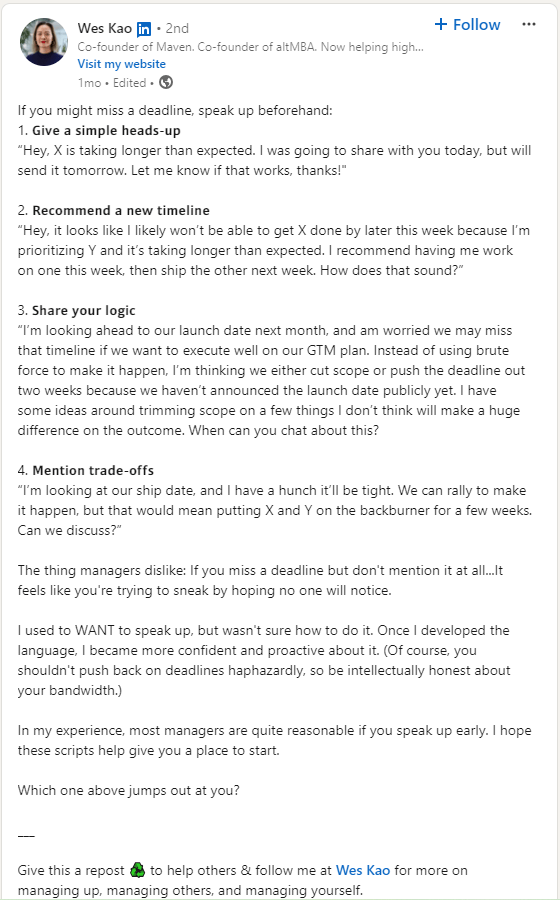
Practical, actionable advice is some of the most consistently engaging content on LinkedIn.
Wes Kao is a founder-turned-executive coach who’s “helping high-performers raise the bar for themselves and their teams,” according to her LinkedIn bio.
In a recent post, Kao shared some simple, actionable advice on what you should do if you think you might miss a deadline.
Why This Works
- It offers clear, practical advice that you can put to use if you find yourself on the precipice of missing a deadline
- The post ends with a question that provokes curiosity and encourages readers to engage
- It includes clear calls to action; readers are encouraged to repost, follow her, and sign up for her newsletter
4. Share Company News or Events
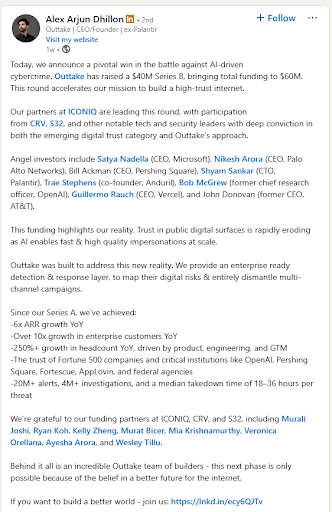
Sharing company milestones with context, gratitude, and clear outcomes helps leaders turn announcements into engaging storytelling.
As CEO and founder of Outtake, Alex Arjun Dhillon recently led his company through a successful Series B round, securing an additional $40 million in funding.
If you’ve spent enough time on LinkedIn, you’ll see that people always tend to be interested in reading posts about fundraising.
In addition to simply sharing the news of the round, Dhillon also took the opportunity to thank his financing partners and a slew of angel investors. He also highlighted a handful of the company’s achievements since their Series A.
Why This Works
- It’s a post about a startup raising money, which tends to be well-received on LinkedIn
- Dhillon used the opportunity to tag venture capital firms and angel investors; seeing names like Satya Nadella, Bill Ackman, and Shyam Sankar as investors is impressive
- On top of sharing the news, Dhillon used LinkedIn real estate to share some of the company’s impressive achievements with a captive audience
5. Take Us Behind the Scenes With Personal Posts
Vulnerability and reflection can be powerful tools for professional connection.
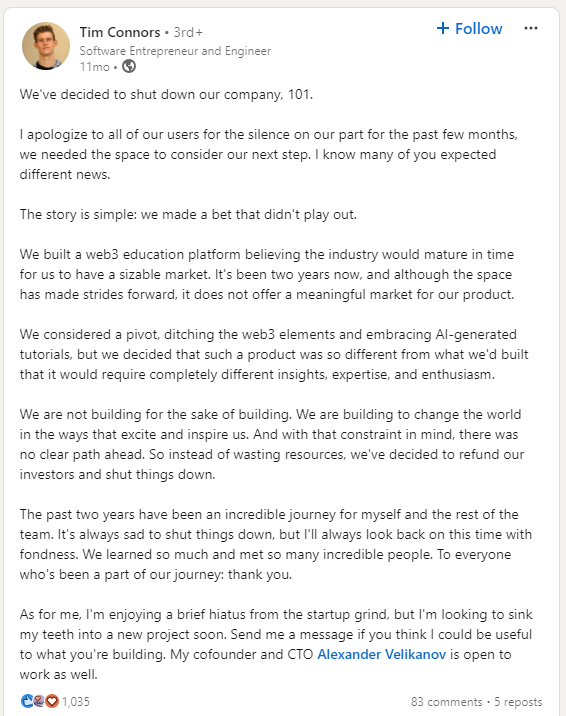
As a serial entrepreneur, Tim Connors has had his share of victories and defeats over the last decade. Most recently, his Web3 company 101 was forced to shut its doors for good.
Rather than letting the moment pass by and moving on to the next thing, Connors used the opportunity to share insights into what it’s like to be a founder of a project that fails while expressing optimism and thankfulness for his experiences along the way.
Why This Works
- People usually don’t like admitting defeat, particularly in public, so Connors’ post stands out as unconventional and authentic
- It’s honest and to the point, illustrating the trials and tribulations founders face
- The post expresses gratitude in the face of failure, which resonated with Connors’ audience as demonstrated by over 1,000 reactions and 80 comments at the time of writing
Building a high-quality, engaged audience is hard work, requiring a lot of thought, effort, and persistence.
Tips for Writing Engaging LinkedIn Content
You can’t just decide to start publishing content on LinkedIn and expect to become an overnight sensation. Building a high-quality, engaged audience is hard work, requiring a lot of thought, effort, and persistence.
Before you sit down to write your first post, here are some tips to guide you:
1. Know Your Audience
Understand who you’re writing for and make sure your content relates to the interests and challenges. That’s how you increase the chances your posts resonate.
2. Be Authentic
Since authenticity builds trust and makes your content more engaging and relatable, share personal experiences and insights whenever inspiration strikes.
3. Keep It Concise (Most of the Time)
Sixty percent of LinkedIn’s traffic originates from mobile devices. Since mobile users often scroll through content quickly, it’s important to use clear and concise language and get to your point quickly.
Of course, there are always exceptions to this rule; longform content may be a better medium for discussing complex topics or sharing in-depth insights.
4. Use Images
According to LinkedIn, posts with at least one image typically get twice as many comments as those without them. When possible, incorporate images, infographics, and videos into your content to make it more eye-catching.
Not sure where to grab images? There are tons of free repositories on the internet, along with several AI-powered image generators you can use.
If you want your LinkedIn content to engage your audience, you need to be more thoughtful with what you put out and truly add value and insights for readers.
5. Don’t Take the Easy Way Out
While memes and easily shareable content might have worked wonders for engagement in recent years, that’s no longer the case. LinkedIn is deprioritizing certain content now in hopes of preventing it from going viral.
If you want your LinkedIn content to engage your audience, you need to be more thoughtful with what you put out and truly add value and insights for readers.
6. Post Consistently
Sharing content regularly keeps your profile visible, which makes it easier to build your personal brand and engage your audience over time.
How Often Should I Post on LinkedIn to Maintain Engagement?
As a general rule of thumb, executives should post once or twice a week on LinkedIn. Any less than this, and you slip out of your followers’ minds.
Any more, and you risk annoying your audience — not to mention having to invest a substantial amount of time on content creation.
Now that you have a better idea of why you need to start prioritizing LinkedIn content and some tips for getting started with a basic strategy, let’s examine some inspirational ideas you can leverage to create engaging content of your own.

A steady posting rhythm helps you stay top of mind while leaving room to focus on quality over quantity.
Ready to Execute Your LinkedIn Strategy?
If you’re looking to establish yourself as a thought leader in your industry, LinkedIn is perhaps the best platform to make that happen.
But with only so many hours in the day, you might be worried about how you’ll find the time needed to create LinkedIn content that captures your audience’s attention.
By enlisting the services of a social media management agency, you’ll have a team of experts to support you.
The typical agency works with you to create a strategy that helps you achieve your goals, then helps execute it smoothly — leaving you time and energy to invest in other business priorities.
To learn more about how social media management services can help you breathe life into your LinkedIn content ideas, check this out.


