Earned Media Examples That Build Brand Credibility

TL;DR Earned media — real coverage in press, podcasts, etc. that you don’t pay for — can build credibility, visibility, and executive authority without relying on paid placement. The article also explains how earned, paid, and owned media reinforce one another, then outlines practical ways to become more newsworthy, from responding to trends and sharing proprietary data to developing stronger executive voices and media relationships.
TASER recently made headlines, but not for the reasons you might think.
The company’s president, Josh Isner, recently told his employees that AI was coming for their jobs — not to take them, but to make them better. He insisted that the technology would help them do more, not replace them, and that parent company Axon Enteprises had no interest in slashing its workforce.
That message soon became a national business story, showing how a clear executive position can travel far beyond its original audience and generate earned media.
For companies, securing earned media spots for executives is critical. It gives the brand a human face, and it’s often easier to land than coverage for a product launch or company announcement.
What Is Earned Media?
Earned media is coverage a company or executive receives at no cost: press mentions, guest bylines, podcast appearances, broadcast interviews, analyst citations. A journalist, editor, or host chooses to feature you because you’re newsworthy or useful, not because you bought the placement, which is what makes it more persuasive than advertising.
Audiences trust a third party’s word over a brand’s. One recent study found that consumers trust a company 3.2 times more when they see it in an editorial feature than when they see the same business in a paid ad in the same publication.
For companies, securing earned media spots for executives is critical. It gives the brand a human face, and it’s often easier to land than coverage for a product launch or company announcement.
Organizations that regularly put their executives forward for interviews, bylines, and commentary can achieve something bigger: establishing those leaders as trusted voices that media outlets turn to for insight and expert commentary.
In a survey of B2B marketing and communications professionals, two-thirds ranked customer and market trust as the top benefit of a visible CEO, with nearly half pointing to media presence and thought leadership.

Source: Baden Bower, The Credibility Effect: 2026 Edition
Earned Media Vs. Paid Media Vs. Owned Media
Earned media works best for building your brand when used alongside paid media and owned media. Each plays a different role in building visibility, trust, and influence.
- Earned media provides third-party validation for executives and companies, while raising their profile.
- Paid media, including sponsored op-eds and other placements, guarantees visibility. It can also help leaders and brands target specific audiences, whether that’s a particular industry, job title, or region.
- Owned media is what you create and distribute yourself, from LinkedIn posts and Substack newsletters to company blogs and email lists. Valuable for relationship-building, it drives leads into the funnel and helps grow an on-demand audience.
For executives building a brand, these three types of media work together. An earned placement, such as a bylined article or podcast interview, establishes authority. Paid distribution extends its reach, while owned channels like LinkedIn keep the conversation going long after the original story runs.
Together, they create a larger executive platform: a recognizable point of view, developed consistently across channels and associated with clear expertise.
Earned Media Examples
The best earned media does more than generate attention. It gives audiences something memorable while strengthening the reputation of the person or company involved. These six examples show how brands and business leaders spun newsworthy ideas, actions, and perspectives into meaningful coverage.

Chili’s won media attention by opening a faux storefront that looked like a payday lender.
Chili’s turns restaurant sticker shock into lifestyle coverage
What happened: To launch its Big QP burger last year, Chili’s built a fake storefront beside a Manhattan McDonald’s designed to look like a payday lender, offering customers cash toward their meal. The stunt drew lines stretching three hours and generated more than 6 billion earned impressions.
Why it’s earned media: Marketing and lifestyle outlets covered the pop-up because it turned a product launch into a timely, visual story. The joke also tapped into a familiar complaint: fast food no longer feels cheap.
The takeaway: Clever ideas are more likely to earn coverage when they speak a specific, broadly felt problem. Here, the humor worked because it was grounded in a real consumer pain point.
Syndio’s CEO shares her doubts about AI with Fortune
What happened: Maria Colacurcio, CEO of decision intelligence firm Syndio, recently published a Fortune commentary admitting that AI had made her “three times the CEO” she was a year earlier — and less certain of her own judgment. After an agent perfectly mimicked her voice, Colacurcio worried that convenience could lead people to stop thinking for themselves. Fortune paired her essay with one from her college-aged daughter raising the same concern.
Why it’s earned media: Fortune ran the piece as editorial, not sponsored content, and several other outlets republished it.
The takeaway: The best earned-media op-eds don’t simply showcase an executive’s expertise. They expose a genuine tension, doubt, or uncomfortable truth that leader is especially well positioned to articulate.
CostCo’s price cutting makes headlines
What happened: On Costco’s Q3 2026 earnings call in late May, CEO Ron Vachris announced the retailer was cutting Kirkland Signature prices on several everyday items. Vachris tied the move to a long-standing philosophy: be first to lower prices and last to raise them. That same earnings season, Procter & Gamble, Kraft Heinz, Hershey, and Keurig Dr Pepper were all telling investors that tariffs were forcing price increases.
Why it’s earned media: Financial, retail, and consumer outlets covered the cuts because they challenged the broader narrative of inflation-driven price increases. More importantly, they gave Costco tangible proof that its value proposition still guides business decisions.
The takeaway: A stated value becomes more newsworthy when a company proves it under pressure. Cutting prices during a tariff-driven wave of increases turned Costco’s familiar pricing philosophy into evidence rather than marketing copy.

1X Technologies had Wall Street Journal reporter Joanna Stern put its NEO home robot to the test.
NEO’s flawed robot makes waves in the Wall Street Journal
What happened: When the Wall Street Journal’s Joanna Stern tested 1X Technologies’ home robot NEO in person, CEO Bernt Børnich didn’t dodge the obvious weak point. Early units still need a human operator behind the scenes, since the company needs that data to make the robot work on its own eventually. That limitation became part of the published story instead of something 1X tried to hide.
Why it’s earned media: A reporter tested the product herself and published what she found, limitations included — the opposite of a scripted press release. That candor helped the story spread to Forbes, trade publications, and international tech outlets. In the five days after launch, 1X booked 10,000 preorders.
The takeaway: Letting a journalist see a product’s rough edges can make coverage feel more trustworthy than a tightly managed demonstration. That credibility can positively influence potential customers.
Axon bucks the AI layoff narrative and gets front-page coverage
What happened: This past spring, as companies including Coinbase and PayPal announced workforce cuts tied to AI, Axon Enterprise (the makers of TASER) president Josh Isner sent a different message to his 5,000-plus employees. AI would help teams accomplish more, Isner wrote. He ended with a blunt line that reporters seized on: “Block out the noise and keep kicking ass.”
Why it’s earned media: The message wasn’t written as a press release, but its timing and clarity made it newsworthy. The Wall Street Journal covered Axon’s position, and trade outlets framed it as an alternative to the prevailing narrative of AI-driven layoffs.
The takeaway: Internal communication can become external thought leadership when an executive takes a clear position on a wider business issue. A specific, timely stance gives journalists — and audiences — something to remember.
How To Earn More Media Coverage
Earning media coverage takes more than a newsworthy product launch. Journalists want a timely angle, a strong opinion, real data, or a source who makes their job easier.
The tactics below are what separate executives who show up in the press regularly from those who only get coverage when they have news to announce.
Power out? No problem. pic.twitter.com/dnQ7pOgC
— OREO Cookie (@Oreo) February 4, 2013
Tap into timely or trending news items
One of the best ways to improve your odds of earned media coverage is to do a little newsjacking. Look at what’s making the headlines and what people care about right now, then consider how your own products, services, and insights intersect with that news.
For example, when a power outage darkened the Superdome during the 2013 Super Bowl, Oreo’s social team tweeted a simple image of a cookie, noting that “You can still dunk in the dark.” That single, well-timed post generated nearly 15,000 retweets and turned Oreo into one of the most-covered advertisers of the night.
Companies don’t need a blackout to pull off the same trick. Commenting quickly on an industry report, a regulatory shift, or a competitor’s misstep can get similar pickup on a smaller scale.
Offer a contrarian or controversial opinion
Here, we’re talking about a hot take on a trending or talked-about topic. It’s a riskier play than newsjacking, but a well-placed contrarian opinion can do more for an executive’s visibility than a dozen safe, on-message quotes.
Contrarian opinions earn coverage because they create tension, and tension makes for a better story than agreement. But the tactic only works if the opinion is real and defensible. Executives who go contrarian just to generate buzz, without the conviction to back it up, tend to get exposed the moment a reporter pushes back.
Provide surveys or proprietary data that add to the conversation
Media outlets are always looking for topical surveys and reports they can spin into a timely story. Companies can oblige them by sharing credible in-house research, then making an executive available to comment.
One company that excels at this is POS tech provider Lightspeed Commerce, which regularly publishes surveys on retail- and hospitality-related topics such as shopping preferences and tipping habits. That research has helped founder and CEO Dax Dasilva land interviews with the likes of USA Today and Bloomberg.
Lead with a human face
Reporters aren’t looking for another press release. They’re looking for a person with a clear opinion, a story, and the willingness to put their name behind both.
That’s even more critical as AI-generated content makes corporate communication sound increasingly generic. An executive with an authentic voice and a real point of view — often developed with help from a ghostwriter— is more likely to stand out.
That visibility should extend beyond a single interview. Carrying the same perspective across media commentary, bylines, LinkedIn, newsletters, and speeches is what turns occasional exposure into an executive brand.
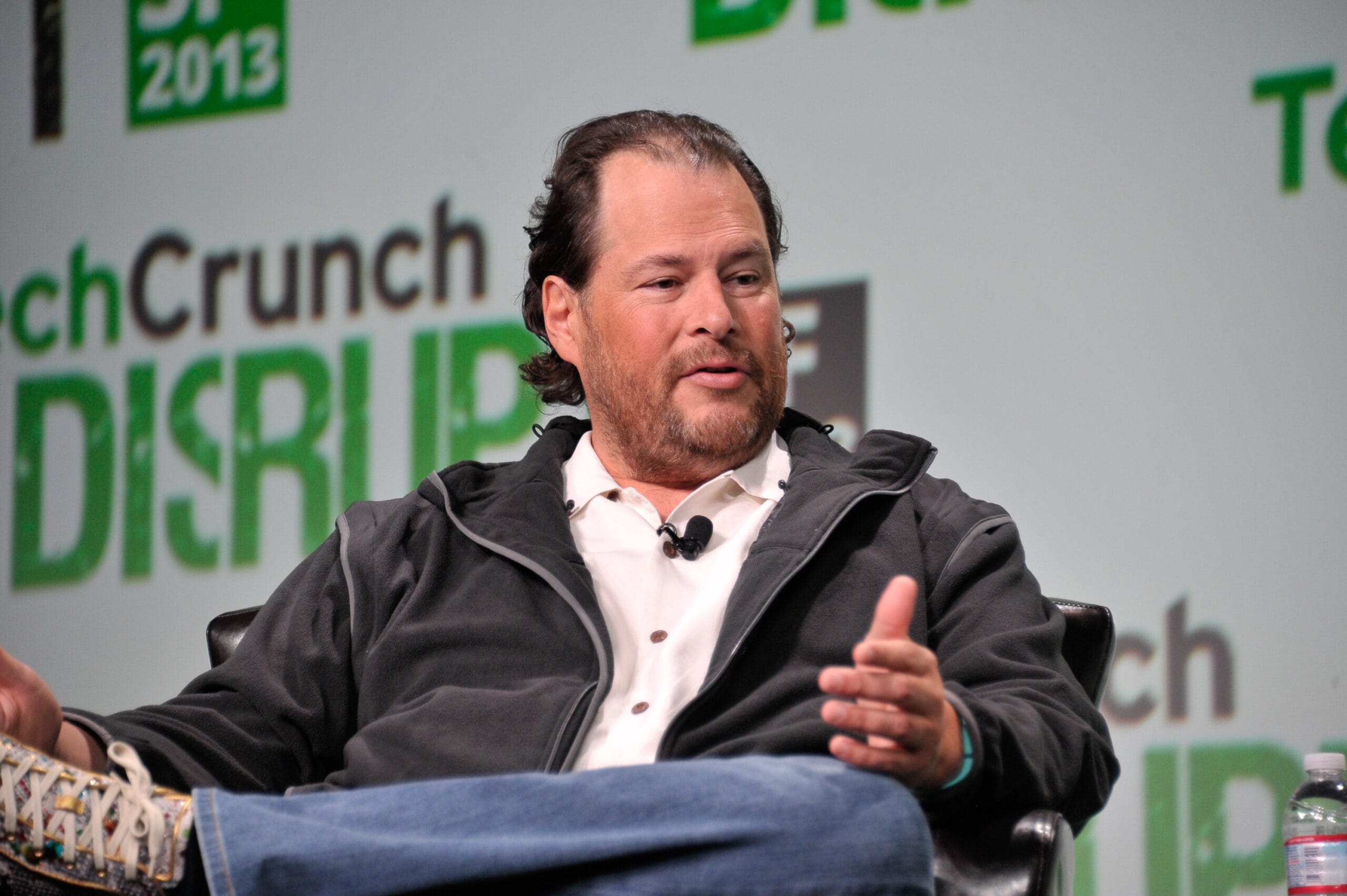
Salesforce co-founder and CEO Marc Benioff treats journalists as friends of the company. Credit: Wikimedia Commons
Build relationships with journalists
Executives who are serious about earned media often go straight to the source, cultivating ties with reporters who cover their industry. By giving journalists access and good soundbites, they can establish themselves as go-to sources.
Salesforce co-founder and CEO Marc Benioff has said he treats journalists as friends of the company, not adversaries, and considers those relationships a pivotal part of his marketing strategy. That reputation for being reachable and quotable, even on a tight deadline, is a big part of why outlets keep coming back to him.
Building a good rapport with the press isn’t rocket science. Respond quickly to journalists’ queries. Don’t be too salesy with reporters, who have little patience for canned pitches and product plugs. And be sure to provide commentary and insights they can actually use.
The executives who become enduring media sources usually do more than maintain a press list. They develop a clear area of authority, a distinctive perspective, and a steady cadence of useful ideas. Journalists may be one audience for that work, but customers, employees, investors, and industry peers are paying attention, too.
How To Strengthen Your Executive Presence
For executives who want to build an audience, earned media is just one part of an integrated approach that should also include thought leadership strategy, ghostwriting, social media management, and personal branding.
The right agency can help you put the pieces together so they meet your goals and make an impact. To learn more, read this.
FAQ
What is earned media in simple terms?
Earned media is real coverage or attention a brand gets without paying for placement, a news story, a quote, a share, or a review. It’s called “earned” because someone else — a journalist, a customer, or a trade outlet — decided on their own that it was worth covering.
What qualified as earned media?
Any third-party coverage you didn’t buy: news articles, interviews, bylined op-eds, podcast mentions, reviews, social shares, awards. It excludes content you publish yourself (owned media) and anything you pay to place, including sponsored posts and traditional ads.
What are 10 examples of media?
Print (newspapers, magazines), broadcast TV, radio, news websites, social media, out-of-home (billboards, transit ads), podcasts, email newsletters, trade/industry publications, and influencer or creator content.
How do you measure the value of earned media?
There’s no perfect formula, but the useful signals are the reach of the outlets that covered you, any traffic or search lift right after, and share of voice against competitors over time. The more telling sign is simpler: did people start talking about, citing, or finding you differently afterward.
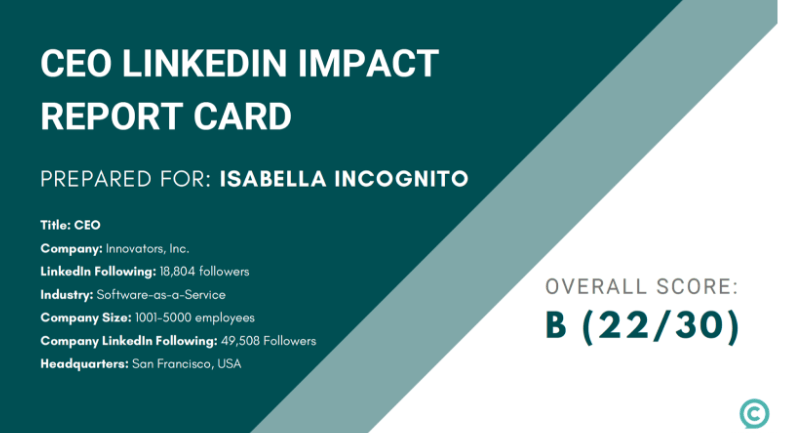
Curious How Your Company's CEO is Doing on LinkedIn?
We specialize in helping executives put their best foot forward. If you're curious how your company's CEO is doing on LinkedIn, share a link to their profile, and we'll prepare a customized CEO LinkedIn Impact Report Card like this.