How Often Should A CEO Post On Social Media? A 2026 Guide

Why is it important for executives to be on social media? Let us count the ways.
According to Washington State University’s Carson College of Business, there are at least four reasons the C-suite should embrace social media. De’Andre Brown, founder & CEO of The Brown-Smith Agency, lists seven. Everyonesocial turns up five.
Statistics bear out the importance of an executive social media presence. A Hootsuite report found that simply being present on LinkedIn or X has its benefits, as execs on social media are “perceived 23% more positively than companies without.”
Eighty-six percent of Americans believe transparency from businesses is more important than ever before, and a Weber Shandwick study found that 86% of executives with a social CEO leading the company describe that CEO as “open and honest.”
Seventy-seven percent of consumers prefer to make purchases from a company where executives are active on social media.
Eighty-one percent of consumers believe that socially active CEOs are better equipped to lead companies, and 80% of employees say they’d rather work for a CEO who engages with people on social media.
In other words, if you’re an executive who’s not on social media, you’re probably losing out to your competitors who are — and missing out on a whole raft of opportunities.
Table of Contents
- Building a Personal Brand
- Sharing Thought Leadership
- Professional Networking
- Staying Informed and Remaining Relevant
- Raising Brand Visibility and Awareness
- Recruiting and Employer Brand Building
- Driving Business Growth
- Managing Online Reputation and Crisis Communication
1. Building a Personal Brand
Social media represents a great opportunity to build a personal brand, which in turn establishes authority, gives you a competitive advantage, generates trust and credibility, and enhances the reputations of both you and your company.
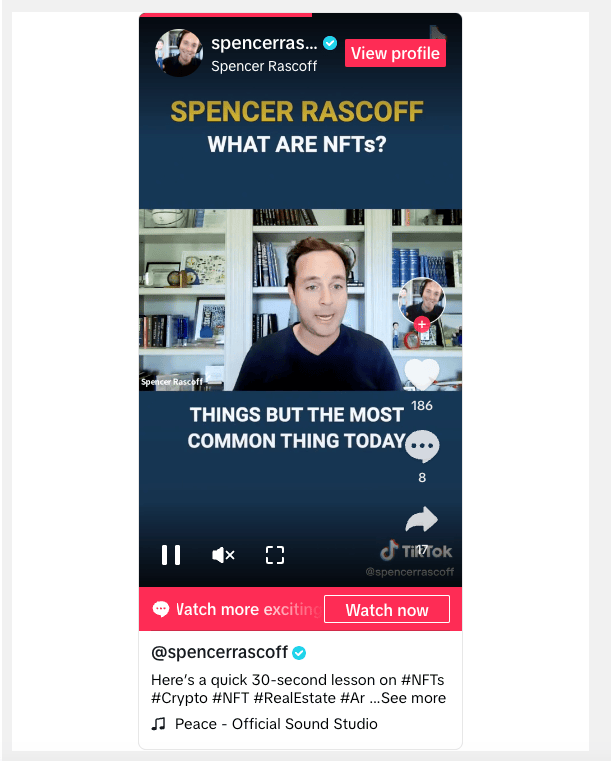
An example of a leader using social media to build their brand is Spencer Rascoff. The founder of Zillow and Hotwire gives career and business advice through TikTok videos while also keeping up with relevant trends.
His strong presence on TikTok is one of the primary reasons he’s approaching household name status among younger business audiences.
2. Sharing Thought Leadership
Thought leaders drive industry conversations and set the tone for their sector through their knowledge and expertise—but only if they’re able to demonstrate these qualities.
Social media lets leaders amplify their experience and inspire others with their stories of success and failure.
Thought leaders within a company also reflect well upon the business, showing it to be forward-looking and on the cutting edge of new developments.
Their large social media followings let them shape and direct industry dialogue.
One of the most highly regarded women on Wall Street, Sallie Krawcheck, makes videos about finance.
Currently the CEO and co-founder of Ellevest, a digital financial advisor for women launched in 2016, her informative, helpful style contributes to her status as a thought leader in the financial industry.

3. Professional Networking
One of the most valuable yet underrated uses of social media is as a channel for networking.
LinkedIn, especially, is a perfect tool for deepening connections with peers, reaching out to people you’ve recently met, finding and engaging with potential recruits, and nurturing relationships with former colleagues.
Executives can connect with other business owners, partners, and suppliers through social media, leading to new business opportunities and collaborations.
This can be particularly useful for businesses looking to expand their reach, form strategic partnerships, or break into new markets.
By sharing useful information, resources, tips, or opportunities that can help colleagues in their careers, you build credibility and rapport.
You can also provide feedback on their projects or ideas and show appreciation for their efforts.
Following a conference or industry event, you can reconnect with people you’ve met who had special insights into a problem you’re facing or who mentioned a business deal — taking that relationship to the next level.
You can also use LinkedIn to stay apprised of more networking opportunities such as conferences, lectures, and summits, like the Accountex example shown below.

4. Staying Informed and Remaining Relevant
For executives in a variety of industries, social media can be a source of the kind of information—trends, opinions, news, predictions—that they need to stay informed and remain relevant.
Successful CEOs rely on their feeds to see breaking news first, gain new perspectives, hear industry opinions, reach a more diverse audience, and make informed decisions.
Active execs can follow influencers and thought leaders.
This kind of knowledge can be valuable in making strategic decisions and staying ahead of the competition.
Posts like Michael Spencer‘s about AI investment, for instance, can help both investors and tech industry watchers.

5. Raising Brand Visibility and Awareness
Social media can be an effective tool for building brand awareness for your company. By consistently sharing valuable content and engaging with customers, executives can help boost their company’s visibility.
A solid social media presence can differentiate your brand from that of your competitors, establish a unique identity, and humanize the company.
For example, James Watt is the self-proclaimed “captain” of Brewdog, a brewery with locations around the world.
By showcasing his leadership on his LinkedIn account and other social networks, Watt simultaneously elevates Brewdog’s profile in a competitive space.

6. Recruiting and Employer Brand Building
Social media is also a powerful recruiting and retention tool. Using platforms like LinkedIn, Facebook, and even Twitter/X, leaders can share their company culture with other industry professionals and advertise job vacancies.
According to 2022 research from Brunswick, 82% of employees believe it’s important for business leaders to communicate the company’s vision and values through social media channels.
Furthermore, 76% of senior executives believe that having a CEO on social media gives the brand more credibility.
Social media also makes it easy to showcase company culture and work environment to attract the best fit.
You can do this through highlighting new hires, sharing behind-the-scenes content, and showcasing employee perspectives.
For example, UXP software company Plaid uses video to highlight the diversity of its workforce.

It’s telling that 73% percent of CEOs on social media say that one of the top benefits is using it to speak with employees.
More proof points: 43% of executives with socially active CEOs say their company’s leaders are inspiring, compared with only 26 percent whose CEOs don’t use social media.
7. Driving Business Growth
Social media provides executives with a powerful channel for communication with customers.
This direct line to consumers leads to a better understanding of their needs, preferences, and pain points and allows leaders to gather feedback on their products and services.
By actively listening to customers on social media, executives can gain valuable insights to help make informed decisions and improve their products and services.
Indeed, half of consumers believe that CEOs who don’t use social media will fall out of touch with customers.
Social media can also have an impact on leads, website traffic, and sales.
Executives can drive engagement to a company’s website and products by sharing brand-focused content like product launches, whitepapers, and press releases, all framed in a personalized way.
In addition, social media channels let businesses gather customer reviews and enhance service quality.
8. Managing Online Reputation and Crisis Communication
As Richard Branson once famously remarked, “Your brand name is only as good as your reputation.”
Social media lets you control the narrative and tell your story, both key ingredients to managing your online reputation.
An aware and socially active executive can tap into consumer concerns before they lead to backlash. The savings, financially and reputation-wise, are potentially huge.
One example of a company defusing a situation is Apple’s decision to use X, formerly Twitter, to offer quicker customer service than the traditional route, which took up to 17 hours to respond to a customer.
Since the launch of Apple Support on X, the company has gathered over 150,000 likes and retweets for outstanding customer service in the US and strengthened its online brand reputation.

And, in a crisis situation, having a real-time public channel that reaches stakeholders and the public directly can prevent misinformation from spreading.
Using social media, executives can also monitor conversations, ensure messaging is consistent across channels, express empathy and concern, release crisis-specific content, and analyze and learn from what worked and what didn’t.
Now, those are a lot of reasons for executives to consider getting on social media and taking their presence to the next level.
However, the amount of knowledge and expertise necessary to do social media right, especially for a time-strapped exec, can be overwhelming.
That’s why we recommend turning to a full-service agency like CSuite Content for strategic and tactical support. With its team of experts, the agency can ensure that you’re getting the most out of your social media channels.
Curious How Your Company's CEO is Doing on LinkedIn?
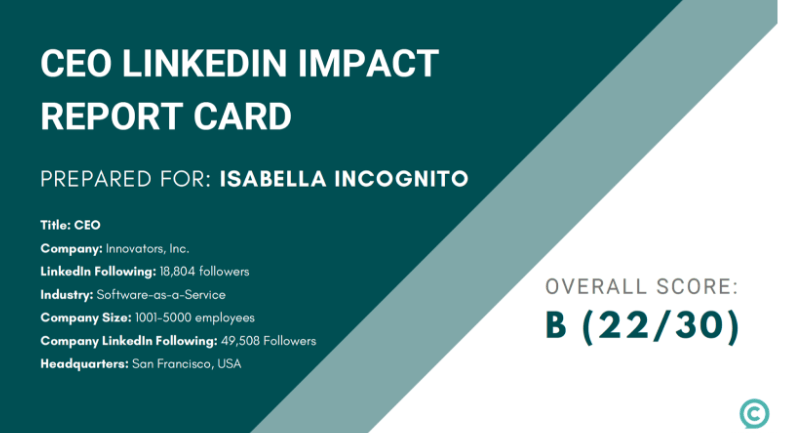
We specialize in helping executives put their best foot forward. If you're curious how your company's CEO is doing on LinkedIn, share a link to their profile, and we'll prepare a customized CEO LinkedIn Impact Report Card like this.