

Content Marketing vs. Thought Leadership: A Complete Guide

Pop quiz: When you write a blog post about the newest trend in your industry, are you engaging in content marketing or thought leadership?
While people often use these terms interchangeably, and both tactics ultimately aim to do the same thing — create new customers — they play unique roles.
Content marketing answers the questions your audience is already asking. Thought leadership reframes those questions entirely to change the way your audience thinks.
Read on to learn all about the differences between content marketing and thought leadership and how you can use them together to accelerate your business.
What is content marketing?
Content marketing is a marketing discipline focusing on creating, publishing, and promoting useful content that engages an audience, builds trust, and ultimately cultivates long-term relationships. By exploring a variety of formats — including blog posts, videos, infographics, white papers, case studies, and webinars — and sharing it regularly through social media, email marketing, and paid advertising, businesses can attract potential customers without having to overtly sell to them.
According to the New York Times, 90% of organizations use content marketing to engage customers. By sharing relevant information that addresses the audience’s pain points at every stage of the buyer’s journey, content marketing can help brands position themselves as trusted advisors — which ultimately increases the likelihood of conversion.
In fact, it’s common for brands to generate $5 in revenue for every $1 they spend on creating and promoting content, a key reason why content marketing remains so popular.

Every dollar spent on thought leadership returns an average of $14, nearly 3x the return of content marketing.
What is thought leadership?
Thought leadership is the practice of founders, executives, and business leaders sharing unique perspectives and experiences to demonstrate authority in their field. It helps leaders influence industry conversations and the way folks think about key challenges and trends.
With a steady stream of articles, social media posts, newsletters, and speaking engagements, thought leaders give audiences original insights that go beyond simple product promotion. Through fresh ideas and bold takes, business leaders can attract attention and build trust and credibility within their audience, helping them create deeper relationships with the folks they’re hoping to engage.
While this approach helps leaders strengthen their personal brands, it also raises brand awareness for their organizations, helping them cultivate a reputation as innovative, forward-thinking companies. When executed with precision, thought leadership has proven to be quite lucrative. One recent study from The Harris Poll found that every dollar spent on thought leadership returns an average of $14, nearly 3x the return of content marketing.
Thought leadership takes a more passionate and opinionated tone, giving founders and executives a platform to share their vision of the future and take their audience along for the ride.
Content marketing vs. thought leadership: Key differences
Content marketing and thought leadership often work together to move potential customers along in their buying journey. But they both have distinct goals. Content marketing is ultimately tied to promoting products and services and thought leadership is geared toward influence and authority.
By understanding the key differences between the two tactics, your organization can use them in tandem to stand out in a crowded marketplace.
1. Primary objective: Educate and sell vs. establish authority
The main goal of content marketing is to educate your audience while gently trying to promote your offerings. A classic example of this is HubSpot’s blog, which grew into a must-read resource for marketers and also played a major role in fueling the company’s rise into a marketing and sales software juggernaut.
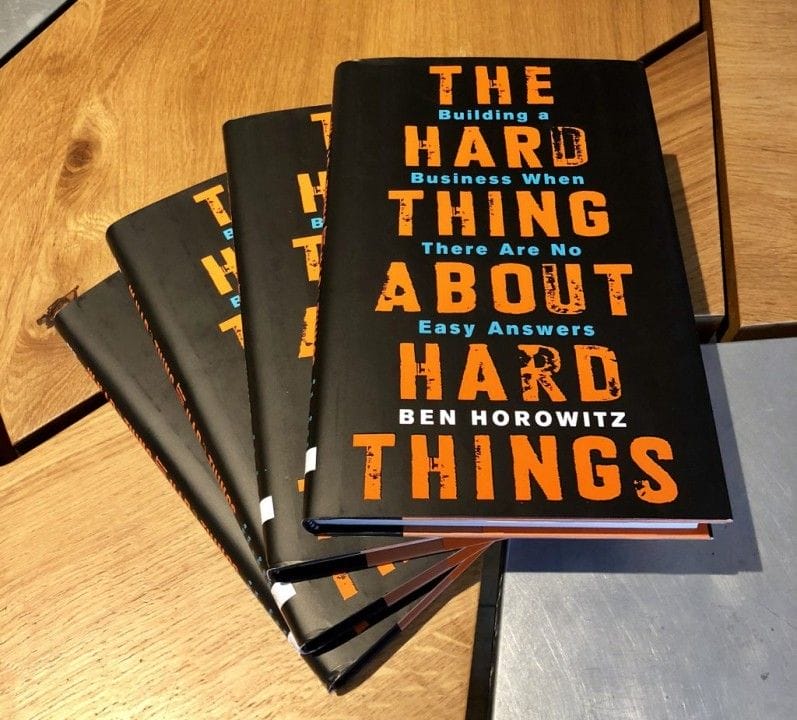
Thought leadership, on the other hand, aims to establish credibility and influence in an industry or specific field without directly selling anything. For example, in The Hard Thing About Hard Things, venture capitalist Ben Horowitz shares battle stories from decades of building and investing in startups. This book doesn’t directly promote any products, but it did help cement the author’s reputation as a go-to voice in Silicon Valley while also enhancing the reputation of his VC firm, Andreessen Horowitz.
2. Content style and tone: Practical and promotional vs. opinionated
Since content marketing aims to educate an audience, the tone tends to be helpful, friendly, and professional. Each piece provides actionable advice readers can take away and apply in the real world, often accompanied by calls to action (CTAs) that tell readers what their next step should be: scheduling a demo, downloading a resource, signing up for a newsletter, that sort of thing.
Adobe provides a slew of textbook examples of what this looks like in the real world. Check out this recent post, The four creative trends that will define marketing in 2026, and notice how Adobe is selling its software without selling its software.
Thought leadership takes a more passionate and opinionated tone, giving founders and executives a platform to share their vision of the future and take their audience along for the ride. Typically, thought leadership challenges industry norms or introduces new ideas that no one else is talking about.
Marc Benioff, founder and CEO of Salesforce, routinely shares his thoughts on what the future looks like. In 2019, he penned a now-famous essay in the New York Times calling for a new form of capitalism called stakeholder capitalism that got everyone talking.
Similarly, in 2025, Shopify CEO Tobi Lütke made waves when he told his workers they needed to explain why AI couldn’t do a certain job before asking for more resources.
Neither of these viewpoints was intended to promote a product or company. Nonetheless, each has since taken on a life of its own and lent a positive halo of awareness and authority to both the executives and their companies.
3. Audience: Mid-to-lower funnel vs. top of funnel
Content marketing targets folks who are already aware of the problems they face and are actively seeking solutions. The idea is straightforward: figure out the challenges your audience deals with every day and what they’re likely to be searching for, and create SEO-optimized content that turns up in those searches.
For example, someone curious about making a pitch deck might search “how to make a pitch deck” and stumble across Canva’s helpful guide on the topic that’s full of CTAs trying to get readers to sign up for free product trials for its design software.
Thought leadership speaks to a wider audience that’s higher up in the funnel. Oftentimes, these folks aren’t even aware they have problems in the first place.
Patagonia founder Yvon Chouinard dedicated his life to environmental stewardship and frequently wrote essays and articles in support of this mission. Rarely, if ever, did he promote his company’s products in those pieces. But his work helped shape how people think about sustainability — subtly influencing outdoor gear-related purchase decisions later on.
4. Distribution: Team-driven vs. individual-driven
Content marketing is usually owned and managed by a company team or department. Assets are published and promoted on brand-owned channels, like blogs, websites, email newsletters, and social accounts, and the messaging is tightly aligned with product positioning and business goals.
Thought leadership content is most often shared by individuals from their own accounts (or with support from small teams that manage this process for them). This individual-driven approach is what makes thought leadership so effective: Ideas feel more authentic because they’re coming from the people behind the companies, not the faceless brand.
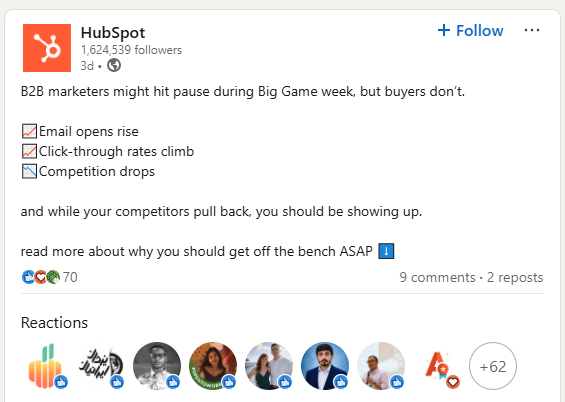
To continue our HubSpot thread, the software company once again provides a great example of how the approaches differ. Head over to HubSpot’s LinkedIn page and you’ll see a slew of polished content that indirectly highlights product capabilities. Swing by cofounder and former CEO Brian Halligan’s LinkedIn profile and you’ll find something entirely different — an eclectic mix of content focusing on what the founder’s up to now: insights into venture capital, podcast appearances, leadership advice, and posts promoting the careers of HubSpot alumni.
Remember, both accounts help push the business forward and advance company goals.. They just play different strategic roles.
5. Measurement of success: Lead generation and conversions vs. influence
Content marketing success tends to be easier to measure because teams track quantitative metrics like website traffic, lead generation, conversion rates, and revenue attribution aiming to see those numbers go up and to the right as time goes on. Using analytics tools found within CRMs and marketing automation platforms, marketers can see what’s working best and then double down on those tactics to accelerate ROI.
Measuring thought leadership is a different beast. It’s harder to quantify because its impact is more about qualitative signals of influence and less about direct conversions. Still, the impact ultimately translates to the bottom line: 55% of “hidden buyers” — unseen stakeholders who hold influence over purchase decisions — are consuming and evaluating thought leadership content while vetting vendors, according to the 2025 Edelman–LinkedIn B2B Thought Leadership Impact Report.
To gauge the success of your thought leadership strategy, focus on audience growth, social media engagement, media mentions, and speaking invitations. As your strategy begins to take root, all of these metrics should gradually increase.
When you start trying to sell or promote via thought leadership, you’re doing something wrong.
How to combine content marketing and thought leadership effectively
Together, content marketing and thought leadership can raise brand awareness, build trust, and keep your company top of mind. Follow these best practices to get unlock the potential of both vehicles and unleash the synergy
Lead with thought leadership
Use executive insights to influence industry conversations, change the way people think, and build trust. That way, when prospects start evaluating solutions, you’ll be one of the first options they’ll consider.
Let content marketing capture demand
After building trust and awareness with thought leadership, create educational content marketing assets to gently guide prospects toward your offerings.
Align ideas, not messaging
Thought leadership should speak to themes and perspectives behind content marketing; in the case of HubSpot, thought leadership explores the power of inbound marketing while content marketing describes specific pain points and software use cases.
Respect the different roles each plays
Content marketing and thought leadership are not the same thing, so don’t treat them interchangeably. When you start trying to sell or promote via thought leadership, you’re doing something wrong.
Think long-term
Even the best thought leadership and content marketing strategies won’t deliver immediate results. Thought leadership puts you on the radar, and content marketing helps prospects hone in on that signal over time.
Use specialized support when needed
Worried you might not have enough time to devote to a robust thought leadership and content marketing strategy? Partnering with specialized agencies can help.
For content marketing, there’s no shortage of dedicated agencies and even “fractional CMOs” for hire who can help design strategy and guide implementation.
Meanwhile, a thought leadership agency can help executives clarify their ideas, create high-impact articles, and — most importantly — maintain a steady publishing cadence.
Learn more about how the right agency can become an extension of your team, helping you unleash the full potential of your thought leadership vision.
Curious How Your Personal Brand as a CEO or Executive Impacts Your Business?
We specialize in helping executives put their best foot forward. If you'd like to see how effective your executive brand is at driving results, share your email address, and we'll send you an Executive Brand Report Card self-assessment like this.


