PR For Tech Companies: A Practical and Helpful Guide

TL;DR — Public relations helps tech companies raise awareness, build credibility, and earn the trust of customers and other stakeholders. It can also accelerate business growth by helping companies reach new audiences and establish their executives as industry authorities.
- This guide explains what makes PR for tech companies different, the channels they can use, and how founders and other leaders can turn their technical expertise into effective thought leadership.
- It also offers real-world examples of companies attracting media attention and managing controversies, along with practical advice on measuring PR results and knowing when to seek outside help.
For once, the cameras were pointed at Flock Safety CEO Garrett Langley.
At the recent TechCrunch Disrupt conference, Langley took the stage to defend his company’s surveillance technology. The backlash against Flock, which makes licence plate readers and other recording devices, has led to lost business and layoffs. Langley’s message to the room: “We shouldn’t pause progress.”
Whether that pitch persuaded anyone is debatable. But it captures the public relations challenge facing technology companies and their leaders today. Just 20% of Americans have a high level of confidence in the industry’s largest players, a new low.
In that environment, every tech company needs to be proactive about building its reputation, not just defending it.
What Makes PR for Tech Companies Different?
Tech moves much faster than many other industries. Startups ramp quickly to international scale, massive funding rounds arrive early, and new products and services are rolled out with more frequency than traditional industries. That all calls for a different style of PR that’s built around speed and quick response times. Likewise, tech is covered by a dedicated corp of journalists and influencers — industry knowledge about who to reach and how to connect is critical.
Then there are the unique optical challenges of tech, as shown by pushback to Flock’s cameras. New technologies often arrive amid a mix of excitement and skepticism. Advances in AI have seized the public imagination while also raising fears about privacy and the future of work. That puts tech companies at the center of public debates that can influence how their products are perceived and adopted.
Those companies also face the challenge of explaining unfamiliar or complex technologies in ways that resonate with the audiences they need to reach. All of this makes clear, credible communication essential from the outset.
For tech companies, PR can help accelerate growth by raising customer awareness, building investor confidence, and attracting talent.
How PR Builds Awareness, Credibility, And Trust
Public relations is about shaping how people perceive a company, rather than simply promoting its products or trying to make a sale. Essentially, PR helps businesses build awareness among the people they want to reach, establish credibility through media coverage and expert insights, and earn trust over time.
For tech companies, PR can help accelerate growth by raising customer awareness, building investor confidence, and attracting talent. Thought leadership is one way to build that credibility. One study found that 65% of target B2B decision-makers trust thought leadership more than traditional marketing materials when evaluating a company’s capabilities.
Effective PR starts with a clear strategy. Before deciding which tactics to use, a company needs to identify who it wants to influence and what it wants those people to think, feel, or do. Is the goal to generate interest in a new product? Attract investors ahead of a funding round? Strengthen the company’s reputation as an employer? Those objectives will shape both the messages and the channels that make the most sense.

The Main PR Channels For Tech Companies
Companies can reach the right audiences through a range of PR channels. Each serves a different purpose, and the strongest strategies use a combination of these:
- Press releases: Announce important company news, such as product launches, funding rounds and strategic partnerships. Give journalists the facts and context they need to assess a potential story.
- Media coverage: Secure independent coverage in respected news outlets and industry publications to build awareness and credibility. Help establish executives as experts in their field.
- Social media: Share insights, participate in industry conversations, and engage directly with customers, employees, and other stakeholders.
- Analyst relations: Help influential industry experts understand the company’s technology and market position, increasing its chances of appearing in reports that inform purchasing decisions.
- Investor relations: Keep current and prospective investors informed via financial announcements and strategic updates, building confidence in the company’s direction.
- Blogs and newsletters: Demonstrate expertise through in-depth analysis and industry commentary, while maintaining a relationship with interested readers.
A strategic PR program brings these channels together to achieve clear company priorities. In a competitive tech PR landscape, however, standing out requires getting creative. Here are five levers to take your PR program to the next level.
Make Executive Visibility A Core Part Of Your PR Program
Founder-led PR can be especially powerful in tech. Often, the founder is also the company’s chief product developer, visionary, or evangelist. Few people are better positioned to explain what makes the technology different, why it matters, and where the industry is headed.
That makes founders natural candidates for thought leadership. Much like founder-led sales, building a public profile gives them an opportunity to raise awareness, establish credibility, and build relationships with potential customers long before a sales conversation begins.
That executive visibility can take several forms:
- Social media: On LinkedIn and other platforms, executives can share original perspectives on industry developments, lessons from running the business, and insights gained from customers.
- Blogs and newsletters: Explore important industry issues in depth and build a following around the founder’s expertise.
- Op-eds and contributed articles: Establish authority by sharing original ideas from company leaders and challenging conventional thinking in influential publications.
- Media interviews, podcasts, and speaking engagements: Showcase the founder’s expertise and personality while reaching new audiences.
Effective founder branding depends on offering something more valuable than company news: a distinctive point of view that audiences find worth following. Building that reputation takes consistency.
Founders aren’t the only option. CTOs and other senior leaders can also become influential advocates, helping tech companies reach audiences interested in different aspects of their business.

Nvidia CEO Jensen Huang has gained influence by explaining highly technical topics in simple terms. Credit: Wikimedia Commons
Turn Technical Expertise Into A Stronger Public Presence
Tech companies have something journalists and business leaders are hungry for: firsthand insights into technologies that are changing how we live and work. The challenge is turning that knowledge into ideas that resonate beyond technical audiences.
Nvidia CEO Jensen Huang offers a good example. In a 2026 essay on AI, he explained the technology as a “five-layer cake,” showing how the different parts of the industry fit together.
It’s a memorable way to unpack a complex subject. It’s also effective PR: Huang gives journalists a compelling framework for telling the AI story while positioning Nvidia at the center of it.
That’s the power of technical thought leadership. By explaining complex ideas in accessible language, executives can become trusted authorities whose insights help shape the conversation around their industry.
Give Journalists A Real Reason To Cover Your Company
Just because something matters to your company doesn’t mean it’s newsworthy.
Journalists are inundated with pitches, so the key is to look beyond the announcement and find a story their readers will care about. A strong media pitch makes that relevance clear and gives the reporter something substantive to work with.
Effective media relations starts with identifying that hook, then crafting a well-targeted pitch for journalists who cover the relevant subject. Keep it short, make the connection to their audience clear, and offer something useful, whether that’s original data, access to an executive, or a product demonstration.
Here are three recent examples of tech companies giving journalists a reason to pay attention:
Show, don’t just tell (Boston Dynamics)
Boston Dynamics made headlines in January 2026 by demonstrating its humanoid robot Atlas onstage at CES. Watching the robot walk and move gave journalists a striking visual story about advances in robotics.
Beyond pitching company news, tech executives can become valuable sources for journalists covering their industry. Offering timely commentary and informed perspectives helps build relationships that can lead to future coverage.
Lead with original research (Cloudflare)
Cloudflare’s 2025 Year in Review revealed that global internet traffic had grown almost 20%, alongside a surge in AI bot activity. The findings generated coverage and helped position the internet infrastructure company as an authority on changing patterns of web traffic.
Make the founder part of the story (Ghost)
When AI startup Ghost recently emerged from stealth mode, it landed a TechCrunch exclusive by combining an $11 million funding announcement with the story of Zain Javaid, its 19-year-old founder.
Prepare For Difficult News Before It Happens
A data breach or a controversial executive statement can put a tech company on the defensive overnight. How it responds can make the situation better or worse.
That’s why crisis communications planning needs to happen before trouble strikes. Companies should identify their biggest risks, establish a response team and designate spokespersons. When something goes wrong, they need to communicate quickly, acknowledge the impact, and explain what happens next.
Recent tech controversies offer some instructive lessons:

AI startup Artisan faced backlash for its controversial billboards. Credit: Wikimedia Commons.
Think twice before courting controversy (Artisan)
AI startup Artisan drew attention — and fierce backlash — with its “Stop Hiring Humans” billboards. Its CEO later apologized for the campaign and confirmed the slogan had been retired. Provocative marketing can generate headlines, but it can also undermine a company’s reputation.
Listen to the backlash (Discord)
After Discord’s planned age-verification requirements sparked privacy concerns, the online communications platform delayed its global rollout and promised greater transparency and more verification options.
Explain what you’re doing to fix things (Coinbase)
In the wake of a service disruption, crypto exchange Coinbase published a detailed postmortem explaining what went wrong, how it restored service, and what safeguards it was adding to prevent a recurrence.
A crisis communications plan won’t prevent every problem. But it can help companies respond with clarity and confidence when their reputation is on the line.
Measure Progress — And Know When To Get Help
PR is an investment, so it’s important to understand whether your efforts are making a difference. Start by defining what success looks like, then track a mix of quantitative and qualitative indicators
Quantitative measures might include:
- Growth in brand searches and website traffic from target audiences
- Increased visibility and reach through relevant media coverage
- Growth in LinkedIn followers and engagement among industry decision-makers
- More qualified leads, sales inquiries and product demo requests
- Increased interest from potential investors, partners or job candidates
- More speaking invitations and other opportunities for executives to share their expertise
Qualitative measures are equally important:
- Is the company becoming better known and more highly regarded in its target market?
- Are customers and industry peers increasingly viewing your executives as authorities in their field?
- Are journalists seeking out executives for expert commentary?
- Does media coverage reflect the messages and positioning you want audiences to associate with your business?
- Are prospective customers referring to specific articles or executive posts when they engage with your business?
Reputation-building takes time, so look for patterns over months rather than judging success by individual articles or posts. Effective thought leadership measurement can help determine whether greater visibility is translating into meaningful business opportunities.
Turning Your Expertise Into Influence
Thought leadership is a powerful part of tech PR, helping companies turn executive expertise into media attention and a stronger public profile. The right partner can help develop those insights into stories that resonate with influential audiences and build lasting credibility. To learn more about the role of thought leadership in PR, read this.
Curious How Your Company's CEO is Doing on LinkedIn?
We specialize in helping executives put their best foot forward. If you're curious how your company's CEO is doing on LinkedIn, share a link to their profile, and we'll prepare a customized CEO LinkedIn Impact Report Card like this.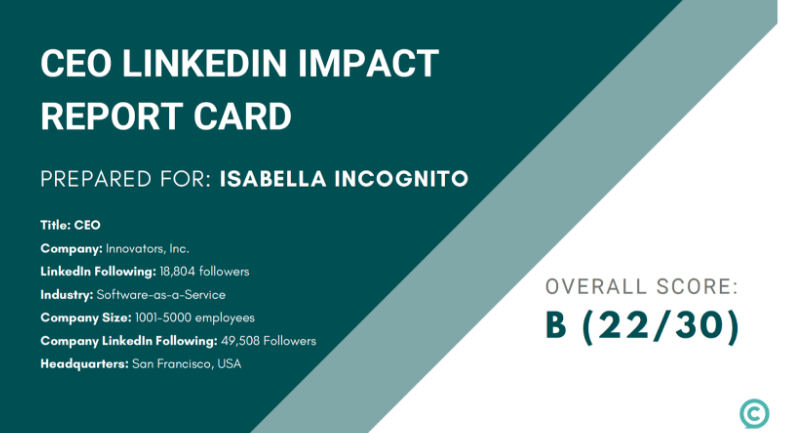
FAQ
Which tech PR agency is the best?
The best agency depends on your company’s goals and industry. Look for a partner with relevant experience, strong media relationships, and a track record of turning technical expertise into stories that resonate with your target audiences. Ask for examples of results that go beyond simply generating coverage.
Is PR being replaced by AI?
AI is changing how PR professionals work, helping them research journalists, monitor media coverage, and develop content more efficiently. But successful PR still relies on human judgment, original ideas, and trusted relationships. Those qualities become especially important when managing sensitive communications or protecting a company’s reputation.
When should a tech startup invest in PR?
Ideally, before a major product launch or funding announcement. Early PR efforts can help startups establish their positioning, introduce founders to influential audiences, and build relationships with journalists. Having a clear story and evidence of customer value makes those efforts more effective.
What makes a tech company newsworthy?
Journalists look for stories that offer something new or reveal a broader industry trend. Original research, surprising customer results, and real technological breakthroughs can all attract attention. A strong pitch explains why the development is relevant to readers beyond the company’s immediate customers.
How long does it take to see results from tech PR?
A well-timed announcement can generate coverage almost immediately, but building a strong reputation typically takes months of consistent effort. Companies should look beyond short-term publicity and track whether they’re attracting relevant audiences, earning recognition for their expertise, and generating new business opportunities.