SaaS Copywriting: A Complete Guide to Doing it Right

When it comes to marketing new SaaS products, words are powerful. Just ask Dropbox, which figured out how to use three words to convey the concept of cloud storage to a world that didn’t yet know it needed it: Your files, anywhere.
With 45% of marketers agreeing that copy has the biggest impact on conversions, and 60% of B2B buyers saying that clear messaging is more important than brand reputation when it comes to making purchase decisions, smart tech companies need to prioritize SaaS copywriting.
What is SaaS copywriting?
Software-as-a-service (SaaS) copywriting is the practice of using simple language to help prospects and customers understand why your software product is important. Instead of just explaining what a product does, SaaS copywriting focuses on how it can make customers’ lives easier: helping reduce friction across the customer journey, from first touch to onboarding and beyond.
The goal is simple: addressing objections, removing confusion, and ultimately convincing a reader to open their wallets and commit to a subscription.
SaaS copywriting covers all the words you see across a company’s products and digital properties, including web copy, digital ads, blog posts, case studies, emails, in-app messages, and thought leadership.
When the words are strung together effectively, SaaS copywriting can lay the foundation for sustainable long-term business growth.
Why SaaS copywriting is so important for companies
SaaS products tend to be complex — to the point the average person might not have any idea what the product does.
That was the case with Slack, which had to explain to its first customers that it was more than a simple messaging tool. The copywriting team came up with five magic words to explain the product’s value, and the rest is history: Slack is where work happens.
Great SaaS copy bridges the gap between technical and business audiences, translating features and technical capabilities into outcomes B2B buyers care about. In most cases, SaaS buying decisions are made by a team instead of a single person; effective SaaS copywriting resonates with a variety of stakeholders, from end users to executives.
Since SaaS companies are always rolling out new features, the job of the copywriter never ends. As users move from websites to free trials to in-app workflows, well crafted copy helps them understand what to do next and figure out how to unlock the full value of products.

While SaaS copywriters spend a lot of time writing content for the business itself, they also support busy executives, crafting communications for internal and external audiences.
What does a SaaS copywriter actually do?
If it’s got words on it, there’s a good chance a SaaS copywriter is involved. Copywriters spend time researching market trends and consumer behaviors and using data to craft clear, benefit-driven copy that explains their products and encourages website visitors and end users to take specific actions (e.g., signing up for a trial, requesting a demo, or trying a new feature).
From websites to executive comms, SaaS copywriting covers a gamut of content formats.
Web copy
SaaS copywriters create landing pages, product pages, pricing pages, you name it — most of the words you see on a website come to you courtesy of a copywriter (legal disclaimers and terms of service being the obvious exceptions). The goal of much of SaaS web copy is to convert visitors to free trials through clear benefits and persuasive calls-to-action (CTAs).
Marketing materials
Copywriters also craft emails, newsletters, social media content, and press releases to support product launches, marketing campaigns, and overarching business initiatives.
Blog posts
Blogs, the cornerstone of most content marketing efforts, are a core responsibility for SaaS copywriters. In today’s hypercompetitive SaaS landscape, blogs help businesses stand out in a crowded marketplace. One study found that companies with blogs generate 67% more leads than those without them.
In-app messaging
Ever been greeted by a pop-up notification in an app telling you how to use a feature or where to find information? Thank copywriters, who produce in-app messages that highlight key functionality and help users navigate products successfully.
Technical documentation
Copywriters also create documentation to help administrators properly configure their products while ensuring end users can figure out how to access and utilize certain features. Such documentation includes things like deployment guides, knowledge base articles, and FAQs.
Executive thought leadership and corporate communications
While SaaS copywriters spend a lot of time writing content for the business itself, they also support busy executives, crafting communications for internal and external audiences. This might take the form of a CEO’s speech at a company town hall meeting or a message to shareholders and investors.
SaaS copywriters can also play an important role in executive thought leadership campaigns. By creating LinkedIn posts, articles, bylines, and talking points in an executive’s voice, copywriters help them establish their authority and drive industry conversations. You can learn more about leveraging executive thought leadership as a business tool here.
SaaS copywriting strategies and best practices
SaaS copywriting isn’t as simple as cramming in as many keywords as possible or firing up ChatGPT and publishing. By following these proven best practices, you can create messages that leave a lasting impression — and ultimately drive more business.
1. Understand your audience
Effective SaaS copywriting starts with understanding your audience on a deep level, including their pain points and priorities. Since SaaS buying decisions involve several stakeholders, your messaging should reflect the needs of multiple personas, from end users to executives.
2. Learn the executive voice
Ghostwriting authentic content for executives is only possible when you’re able to capture their tone and have their personality shine through your writing. This is no doubt challenging, but it’s essential. Authentic messaging is what builds trust and credibility, the ultimate goal of thought leadership.
3. Focus on benefits, not features
Instead of writing about specific features, write about how the product helps solve real customer problems. In Dropbox’s case, the company didn’t write about things like file synchronization and backups across devices. The catchphrase — Your files, anywhere — used three simple words to explain the product’s chief benefit: the ability to access your files from any connected device.
4. Stay consistent across channels
Since 75% of customers expect consistent experiences across channels, it’s important to ensure messaging stays the same whether it’s on the company blog, an email newsletter, or a social media post. Consistent messaging reduces confusion and increases brand recognition.
5. Test, iterate, and optimize
How do you figure out what the best words are? By using tactics like A/B testing and regularly reviewing analytics, copywriting teams can see which messages resonate the most at each stage of the buyer’s journey. By continuously measuring and adjusting copy, SaaS businesses can improve conversion rates and accelerate growth.

Common mistakes in SaaS copywriting
SaaS copywriting may seem straightforward, but there are several common mistakes teams make.
Mistake #1: Taking a DIY approach
Many SaaS businesses leave copywriting to engineers or product managers who aren’t professional writers. While it may seem like a good way to use resources, such delegation often leads to unclear messaging and feature-heavy copy. The smarter approach is to have dedicated writers interview these colleagues and ghostwrite content for them.
Mistake #2: Overrelying on AI-generated copy
While AI tools like ChatGPT can help accelerate copywriting efforts, they can’t replace human writers entirely. One study found that more than 82% of Americans can tell when content is written by AI. What’s more, just 27.1% say they enjoy reading AI-produced content, while 29.8% don’t like it at all.
If you lean on AI too much, not only will you disgust a huge chunk of your audience out of the gate, you also risk turning your readers away with generic messaging.
Mistake #3: Neglecting multi-stakeholder messaging
Since SaaS buying decisions typically involve several stakeholders, copy that speaks to only one customer persona — whether an executive or an end user — may alienate key segments of your audience. Failing to produce multi-stakeholder messaging can slow down sales cycles and hinder product adoption.
Mistake #4: Overindexing on SEO
A good SaaS copywriter will certainly take SEO considerations into account — ensuring that strategic keywords are highlighted and that copy is optimized to rank on search engines and AI answer engines.
That said, it’s important to remember that content will ultimately be read by humans, not machines. Cramming in keywords or repeating marketing slogans is a surefire way to turn off readers. And if no one reads your copy, there’s really no point writing it to begin with.
You can also hire a ghostwriting agency that gives you access to top-tier writers without having to incur the associated overhead.
How to hire for SaaS copywriting
If you’re looking to hire a SaaS copywriter, search for candidates that have backgrounds in business or tech journalism or professional content creation. Experienced writers have strong storytelling skills and are able to create clear and concise copy that converts.
The right copywriter will also be able to work with executives and business leaders, capturing their voice in ghostwritten thought leadership pieces. This is why journalists make great copywriters: They’re used to interviewing business leaders and writing stories about what they’re working on, often translating dense technical subjects into readable prose.
As you narrow down your options, be sure to assess each candidate’s portfolio. The right writer will be able to share examples of case studies, thought leadership content, blogs, and other content they’ve written, giving you a precise idea of what working with them would be like.
Not keen on hiring an in-house SaaS writer? You can also hire a ghostwriting agency that gives you access to top-tier writers without having to incur the associated overhead.
Looking to join forces with an expert writing to kickstart your SaaS copywriting engine? Read about the easiest way to get started.
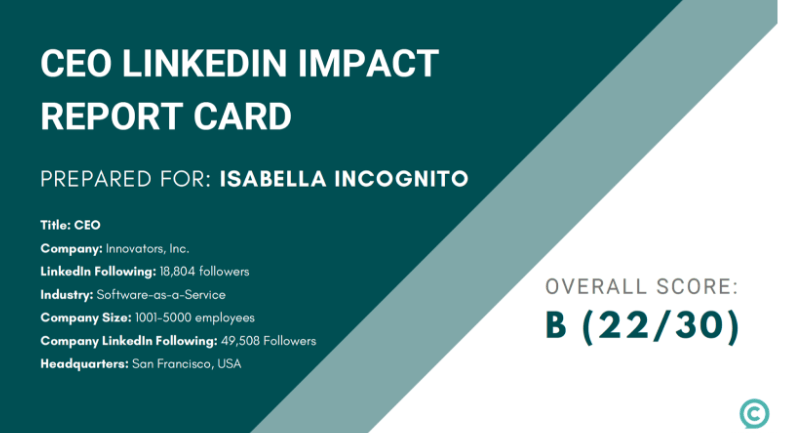
Curious How Your Company's CEO is Doing on LinkedIn?
We specialize in helping executives put their best foot forward. If you're curious how your company's CEO is doing on LinkedIn, share a link to their profile, and we'll prepare a customized CEO LinkedIn Impact Report Card like this.